Pages

Thursday, 3 July 2014

GE, Endeavor Energy and Finagestion team up to boost Ghana's power supply

US Energy giant, General Electric and its partners, Endeavour Energy and Finagestion, have signed a joint development agreement for the Ghana 1000MW Power Project, aimed at adding 1,000 megawatt of thermal power to Ghana’s installed electricity capacity.

The agreement was signed at the offices of the Energy Ministry by General Electric’s Vice-Chairman, John Rice; Finagestion’s Chairman Vincent Le Guennou; and CEO of Endeavour Energy, Sean Lang.

The Ghana 1000MW Power Project Conglomerate is a purely private sector, independent power producer initiative with zero direct financial contribution from the Government of Ghana. The project will combine the construction of an integrated gas-to-power thermal plant, currently underway, and a regasification unit with future importation of liquefied natural gas (LNG) which makes the production of power relatively cheaper and safer.

The John Mahama administration in Ghana has promised to double Ghana’s energy generating capacity to 5000 megawatts of power by 2016.

The first of the two-phase projects, which will cost approximately $900 million and expected to be executed within a period of two years, is to start power delivery in early 2017 with an initial 360 megawatts of electricity in a simple cycle mode.

Upon completion of the initial phase in early 2018, it is expected to produce more than 540 megawatts of electricity in a combined cycle mode, with the second phase anticipated to commence before 2019. This will be in addition to another hydro power plant, the $980 million 400MW Bui Dam which is under construction and should be completed by the end of the year 2014.

The first phase of the project alone will require more than US$20million of development capital, over US$200million of equity from the project sponsors, and more than US$600million in debt financing,” said Jay Ireland, CEO and President of General Electric Africa.

The over-US$1billion project, to be located in the Western Region, includes a Floating Storage and Regasification Unit to facilitate importation of Liquefied Natural Gas (LNG) for power generation. The importation of LNG as part of the project will cut out the challenge the country currently has of having generation plants without gas to power them. The use of LNG is also expected to reduce the cost of generation as compared to light crude oil.

“Current LNG prices are approximately 35 percent less than light crude, yet most thermal plants in Ghana run on it due to shortage of gas,” said Sean Lang, CEO of Endeavour Energy, the company that will co-lead the project’s development.

The Chief Executive Officer of GE, Mr Jay Ireland, said that the project would set a new standard for the way that power would be delivered in Africa.

Speaking on behalf of the Ghana of Government, the deputy Minister of Energy, Hon John Jinapor said: “We thank the Ghana 1000 partners for keeping their commitment to support government efforts to boost electricity generation and lower the cost of power in Ghana.

“The Ghana Government will facilitate and fast track all approvals and permits and provide adequate credit enhancement in a transparent manner,” he added.

MUSIGA Launches 'Shine 4 Africa' Song

A team of top musicians from the Musicians Union of Ghana (MUSIGA) launched the official theme song for the Black Stars at the head office of the Stanbic Bank Ghana Limited in Accra.

At the launch which attracted a number of personalities and the media, the musicians also presented the song and its video to the management of Stanbic Bank. Stanbic Bank as part of their support for Ghana's World Cup campaign, paid for the technical production of the song, which saw all artistes performed at no charge.

'Shine 4 Africa' was produced by Showbiz Africa and it features some selected Ghanaian musicians which include Kojo Antwi, Sarkodie, Noble Nketsiah, Samini and Obour.

Others are Edem, Sherifa Gunu, Efya, Qweci Oteng, Chemphe, Nana Boroo, Skinny Legend and Tic Tac.
Prior to this p r e s e n t a t i o n , copies of the CDs were presented to the journalists and personalities who attended the presentation ceremony.

In a short speech, the Managing Director of Stanbic Bank Ghana Limited, Alhassan Andani, said, 'As a bank, we have made our intentions very clear on our support to see Ghana succeed at the World Cup. We have already contributed to the government's campaign to send supporters to Brazil. And when MUSIGA decided to prepare a theme song for the campaign, we saw it as another opportunity to bring happiness to supporters.'

He stressed that apart from the bank's support for sports development in the country, 'we also have keen interest in the creative industry. We are a major partner in the development of arts in this country. MUSIGA's initiative is laudable and worthsupporting. Supporting the production of the song is yet another testament of our interest in ensuring that quality creative works see fruition.'

He hoped that Ghanaians would welcome and embrace the 'Shine 4 Africa' as the main theme song to support and cheer on the Black Stars in every home in Ghana, in Brazil and in offices.

He, therefore, congratulated MUSIGA for the initiative and hoped that more of those initiatives would follow soon.

Kenyan Government to enact new regulations to control use of petroleum revenues

The Kenyan government is set to enact laws to regulate use of petroleum revenues following continued oil discoveries in the country.

National Treasury Cabinet Secretary Henry Rotich said the new regime would prevent oil incomes being used for items such as public sector wages.

“Laws on managing revenue from resources have to be in place before you start exploiting them,” he said during the African Development Bank (AfDB)’s annual meeting in Rwanda.

Delegates at the meeting heard that the rush to build infrastructure, and pressure from citizens for swift rewards from oil and gas discoveries, have pushed some governments to loosen policy.

That has led to ballooning current account deficits, rising debt and fiscal shortfalls that threaten to take the shine off otherwise positive growth stories.

Resource-reliant Ghana and Zambia show how star economic performers can quickly face the heat. Ghana’s cedi and Zambia’s kwacha have hit record lows against the dollar this year as rising spending has strained state finances.

“It’s as if we haven’t learnt anything about macroeconomic management,” said Mthuli Ncube, chief economist at the AfDB, echoing other delegates at the bank’s meeting.

“The macro-policies are out of line, whether you are looking at budget deficits, current account positions, the debt positions and so forth,” he said.

Africa is the fastest-growing continent after Asia but it has a long way to go before its roads, railways, and schools or hospitals match infrastructure in other economies.

As rapid economic growth cuts donor aid as a proportion of gross domestic product, governments have turned to international markets to finance capital or other spending, but their credibility among investors could quickly crumble if fiscal discipline is not instilled.

“Initially, part of the investor appetite for sub-Saharan African sovereign debt was due to the fact that there was relatively little issuance, and that investors were becoming more attuned to the ‘Africa Rising’ story,” said Razia Khan, head of research for Africa at Standard Chartered bank in London.

“But this risks being eclipsed by the reality of fiscal management shortcomings,” she said.

Ghana, which began oil exports in 2010 and saw economic growth of 7.1 per cent last year, paid a premium for its Eurobond issued in July worth $750 million because of worries about its fiscal and current account deficit. Ghana’s yield of 8 per cent compared with 6.875 per cent on a $400 million bond issue in April by Rwanda, a state with few resources but a better reputation for public financial management.

Zambia, Africa’s biggest copper producer, is growing by about 6 per cent annually. But with an ambitious plan to upgrade its road network and other infrastructure, Fitch downgraded it as the budget deficit widened to 6.7 per cent of Gross Domestic Product (GDP) last year and the current account deficit hit 12 per cent.

The International Monetary Fund urged Ghana and Zambia last month to rein in their deficits to help deal with any shocks, as developed nations scale back economic stimulus that had encouraged investors to turn to Africa for higher yields.

Ghana passes local content law

Ghana’s parliament has passed a petroleum regulation law (LI 2204) known as the local content law. This law is meant to put Ghanaians at the forefront of all petroleum activities ensuring that the country benefits from their new oil resources while the foreign oil companies also get fair returns on their investment.

The law they said will also help in developing local capacities in the petroleum industry value chain, achieving the maximum local employment level and in-country spending of oil revenue. It will increase the capability and international competitiveness of domestic businesses and related supportive industries to sustain Ghana’s economic development.

Another important aspect of the local content law is to ensure a transparent monitoring system to meet the objectives of the government’s economic development and to ensure that entities in the petroleum industry submit their local content plans for their compliance with local content standards regarding the provision of goods and services.

Under the law, indigenous Ghanaian companies will be given first preference in the grant of petroleum agreements and licences, while there shall be at least five per cent equity participation by an indigenous Ghanaian company other than the GNPC before an international oil company (IOC) is deemed qualified to enter into a petroleum agreement or licence, unless otherwise approved by the minister.

Before moving the motion, the Chairman of the Subsidiary Legislation Committee of Parliament, Mr O.B. Amoah, told the House that private companies in the upstream oil and gas sector operating in Ghana, represented by the Ghana Exploration and Production Forum, had reservations about certain aspects and provisions of the regulation, in spite of the fact that they appreciated the benefits of local content strategies to Ghana and IOCs.

Speaking to the press, the Minister of Energy and Petroleum, Mr Emmanuel Armah-Kofi Buah, expressed his appreciation to Parliament for the passage of the law and said Ghanaians had been moved from the back of the bus to the front.

According to him, it had been projected that the oil reserves would yield $20 billion revenue within the next five years and the law would ensure that most of that amount was spent in the country to ensure that Ghanaians had a fair share of the returns.

The minister indicated that all IOCs were to submit their local content plan to the Petroleum Commission and that should contain detailed provisions that would ensure that preference was given to the provision of goods and services within the country which met internationally accepted standards and specifications of the petroleum industry.

Mr Buah asserted that when it came to employment, qualified Ghanaians were to be given the first consideration, saying that the days when “oil companies took insurance policies from foreign insurance companies are over, as an aspect of the new law which deals with insurance states categorically that a contractor or sub-contractor, licensee or other allied entity engaged in a petroleum activity that requires insurance shall procure the services of a local insurance company”.

“The regulation also guarantees employment for Ghanaians in junior and middle-level positions, while requiring a succession plan for Ghanaians to take over positions currently occupied by non-Ghanaians,” he said.

The minister, however, warned that any Ghanaian harbouring the idea of fronting for any foreign company should think again, as anybody who would be found liable would be prosecuted.

Reacting to the law, Tallows oil the major oil extracting company in Ghana, has expressed their willingness to go by the local content law. “We have made a commitment to playing our part in ensuring that the success of the oil and gas industry brings transparent and tangible benefits to local people and national economies where we operate.”

“We believe that Foreign Direct Investment is a real benefit to the host countries where we operate and are committed to bringing the benefits of this investment to support our efforts in delivering sustainable local content.”

Tullow oil added that they were committed to regular engagement and communication with local suppliers to ensure they understand what they want, can easily navigate their contracting and procurement processes and be a part of their transparent supply chain.

Furthermore, “we are committed to working effectively with our suppliers to improve overall performance throughout our supply working closely with key stakeholders at all levels of the community, government and regulator to ensure the delivery of strong local content legislation to support the above commitments.”

“Our commitment, supported by ethical and responsible business practices, will help us to achieve a sustainable and competitive local supply chain for Tullow, building futures in the countries where we operate,” they concluded.

Tuesday, 1 July 2014

New strategy to promote irrigation, mechanization

The Ministry of Agriculture in partnership with districts in the Eastern Province has designed a strategy aimed at increasing agricultural production in the region.

The strategy aims at transforming the rural environment through agro-based industrialization, mechanization, irrigation, and full participation of all stakeholders.

During a one-day consultative meeting that brought together the governor, district mayors, agriculture as well as veterinary officers yesterday, the Director General of Rab, Dr. Jacque Mbonigaba, said the government’s agricultural modernization strategy hinges on increased irrigation, mechanization, and value addition to crop production as well as increased support to the private sector.

He said the government was determined to maximize crop production, adding that Eastern Province was the food basket of the country.

“The role of government in the new strategy will include investing in basic infrastructure by concentrating on areas with high agricultural potential to make them attractive to private investors,” he said.

He urged Eastern Province leaders and experts to double their efforts to increase productivity, noting that the country relied much on the province.

“Eastern Province produces between 70 and 80 per cent of the total national volumes of cereals. It constitutes 80 per cent of marshland cover, supplies 72 per cent of the country’s milk and beef, 80 per cent of banana, cassava; almost all tomato production, among others,” Mbonigaba said.

He challenged local leaders to capitalize on the nature of the land in their respective districts, to maximize production and productivity.

“The province has the largest arable land in the country. The potential here is great,” Mbonigaba said.
Value for money

Mbonigaba, however, lamented that in some cases, irrigation schemes that are already under implementation have never showed real value for money.

He said there was still a challenge of sustainable management of agricultural irrigation schemes.

“Irrigated areas are meant to produce high value crops. We did cost benefit analysis, but can we make it? For example, the irrigation scheme in Rurambi, Bugesera District is not doing so well. About 400 hectares are not being put to proper use,” Mbonigaba said.

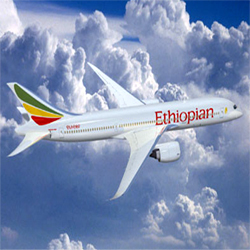
Ethiopian Airlines earns Bombardier’s top award

It was Ethiopian Airlines which came out tops of the Africa and Middle East operators of Bombardier’s Q400 turboprop aircraft with a dispatch reliability of 99.4 percent, taking the honors for the fourth year running since this aircraft type joined the ET fleet.

Ethiopian presently operates 13 of these aircraft, with several of them already reconfigured into a two class version, offering 7 business class seats and 60 in economy class and uses them mainly on domestic and shorter regional routes, including flights to the East African airports of Entebbe, Kigali, Kilimanjaro, Mombasa and Juba for their off peak connections.

Ethiopian Airlines' CEO Tewolde Gebremariam say in a media release: ‘We are pleased to receive the award for the fourth year in a row. I wish to thank our employees and especially those working in our light aircraft and turbo-prop section for this outstanding result. It is the fruit of their continued dedication and hard work. We are committed to providing to our esteemed customers reliable schedule and punctual flights at all times. Our higher dispatch reliability performance is a reflection of this commitment to our customers on the domestic and regional routes’.

Ethiopian was the first African operator to take delivery of a Q400 aircraft and has since been joined by RwandAir, which also operates one dual class Q400 on its domestic and regional routes.
Ethiopian is also a Bombardier certified maintenance facility and besides maintaining their own fleet at their in-house MRO also services the RwandAir Q400.

Ghana to host 2nd West Africa Microfinance Conference

The 2nd West Africa Microfinance Conference (WAMIC 2014) is to be hosted in Accra from July 23-24, 2014, at the Accra International Conference, Accra-Ghana.

The two-day conference which is being organized by The African Centre for Peace Building (AFCOPB) and powered Senyo Global is under the theme 'Reducing Extreme Poverty through Microfinance'. It brings together experts in the microfinance sector, policy makers, investors, legislators and civil society groups to share knowledge and information on best practices in the field and how the sector can be improved to meet its original objectives.

"The 2014 WAMIC is not only going to be one of the biggest gathering of MFIs industry players in the West Africa subregion but would also present an opportunity to develop a road map to a legislative framework for the sector through a high level panel discussion as we look at the future of the microfinance sector in West Africa". Korsi Senyo, The Executive Director of AFCOPB told Awake Business News.

Korsi Senyo added, 'The issues facing the microfinance sector calls for a collective efforts and responsibility as it affects not only MFIs operators and their clients but pose a threat to national security. This is why we (AFCOPB) as a peace-building organization whose basic aim is to solve some of the basic problems (unemployment, lack of credit, poverty etc.) that might have otherwise acted as agent of conflict, wish to champion public awareness on the matter and contribute our quota to solving the problem'.

Some of the conference objectives are to equip participants with the needed skills in managing microfinance business, to provide a common platform for the participants to share ideas and resources, to empower businesses with the skills they need to be stronger and also to help participants identify and take advantage of the microfinance business as an emerging market in Africa.

The 2014 WAMIC which is being sponsored by Tigo Ghana present another unique benefit to participants as a larger platform for sharing ideas and information in the field, showcase their Micro finance companies, identify other areas of business investment and to network with key figures and stakeholders from the microfinance industry.

"We belief in the huge role micro finance services could play in the development and growth of small to medium enterprises within our economy and the role that Mobile Financial services could potentially play in this growth. This is why we (Tigo Ghana) have decided to sponsor this conference" Mr. Selorm Adadevoh - Head of Mobile Financial Services, Tigo Ghana

'We therefore appeal to corporate bodies, the media, NGOs, civil society, development agencies, and individuals for sponsorship, donations and any other form of support towards the realization of this dream.' Korsi Senyo.